Mission Space: Electronics Rocket into a New Frontier
By Michael Parks, Mouser Electronics
A Brief Overview of Designing Electronics for Operation in Space
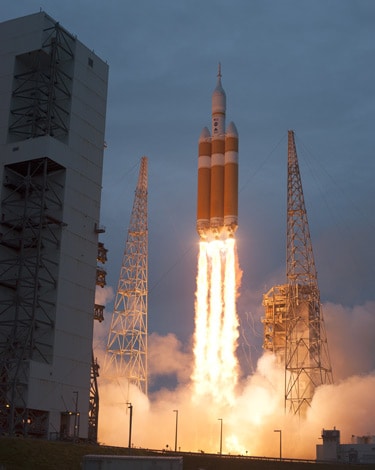
Figure 1: First Launch of the Orion Crew Vehicle.
(Source:Wikipedia)
With the recent Orion spacecraft test flight, humanity is once again attempting manned spaceflight
beyond low Earth orbit (LEO). The test launch marked the first time since the end of the Apollo mission in
1974 that a manned-capable spacecraft had flown so far from our planet. Space exploration technology has changed dramatically since that time, but the dangers that
future explorers and their equipment will face has not. Radiation, extreme temperature fluctuations, and intense
vibrations at liftoff are just some of factors that engineers must handle when designing electronics to operate in
the harsh environment of outer space.

Figure 2: Nanosatellite for NASA’s CubeSat Initiative. (Source:
Wikipedia)
While you might think that these are problems of thin tie-wearing engineers, nothing could be further from reality.
Today you don’t need a NASA-sized budget to get into space, or at least into near-space. Many makers are engaged in
the burgeoning field of amateur space exploration.
Science experiments are now routinely tethered to weather balloons, and if you’re really lucky you can get a
nanosatellite launched into orbit thanks to NASA’s CubeSat initiative.
Regardless of your budget, the operating environment of space
travel is tough on electronics. There are numerous design techniques and engineering principles to keep in
mind when designing electronics that are meant to operate in space. Before we jump
into the details, let’s first
get a better understanding of the challenges posed by operating
electronics in outer space.
The Operating Environment
Figure 3: Source of radiation and high-energy particles in space.
(Source: Wikipedia)
Earth’s magnetic field provides a defensive shield that protects us from being inundated by highly energetic particles (protons,
electrons, and heavy ions) and radiation. These particles can include cosmic rays that come from beyond our
solar system, as well as particles that are ejected from our Sun during Solar Particle Events (SPE). As
we move beyond the safety of our planet, these particles increasingly take a toll on sensitive electronics.
High-energy particles can affect electronics in multiple ways, and someone has taken the time to categorize them
with regard to semiconductors:
- Single Event Transient: High-energy particle affects a particularly sensitive component resulting in a
transient current or voltage spike.
- Single Event Latchup: Particle strike causes an electrical short between components on an integrated
circuit resulting in circuit malfunction, but recovery is possible through a reboot of the affected system.
- Single Event Burnout: A latch up event that results in the affected device being destroyed.
- Single Event Upset: Internal build up charge causes a ”bit flip” in a memory or logic device (more about
this later.)
- Displacement Damage: Accumulation of defects to the structure of silicon due to high-energy particle
impacts.
- Total Ionizing Dose: Buildup of positive charges in insulators and oxide over time result in faulty
circuit behavior.
Thus, various particle events can cause numerous problems that fundamentally alter the operating characteristics of
components. Spurious (i.e., “false”) currents can be induced in circuits resulting in incorrect circuit operation.
Even worse, microchips can be destroyed due to excess induced power. If enough charge accumulates, bits in a
processor or in memory can be flipped, resulting in data corruption. If the corrupted data plays a role in
controlling a critical subsystem such as navigation or engine control, it is possible to lose the entire spacecraft.
Radiation is just one concern. Extreme
variation in temperature can occur over very short time periods, from hundreds of degrees below freezing to
hundreds of degrees in the other direction depending on a spacecraft’s orientation and distance from the Sun. If not
handled properly, thermal stresses can cause unpredictable circuit behavior at best and catastrophic failure at
worst. Space electronics must also handle problems that
can occur before a spacecraft ever leaves Earth’s atmosphere. Violent vibrations induced during rocket-assisted
launches wreak havoc on components and interconnects if they are not designed to tolerate such extreme forces.
Build It Tough
Both radiation and temperature extremes require a variety of unique design techniques when building electronics to
reliably operate in outer space. At the silicon level, individual components are altered in fundamental ways to
provide better resiliency. Other design techniques include redundancy, where additional and/or redundant components,
circuits, or entire systems may be employed in the design. Lastly, there are operational considerations to protect
onboard electronics.
Let’s take a look at some of the design techniques in each category:
Special Design Consideration at the Silicon (Component) Level: Component selection is a critical phase of
designing a space-based system. There are many differences in the engineering and manufacturing techniques of
components that to be considered:
Robust and Redundant Systems: After selecting robust components that can meet the operating requirements,
the next key step is to ensure the system as whole is well architected and that interfaces between components are as
well designed as the components themselves.
- Material selection is one key aspect of ensuring good radiation protection for internal systems. Copper and
aluminum shielding is an option to protect a spacecraft’s circuitry from certain particles, though this is not
effective for higher energy cosmic rays. Lead is another option for shielding.
- Hamming distance functions and parity
bits can be used for memory error detection and correction. The Hamming function is a software-based solution and
does add some processing overhead.
- Modular redundancy techniques such as Triple Modular Redundancy (TMR) is a design topology where redundant copies of the same
circuits are used to process the same data inputs. The outputs are then passed to a “majority gate” that compare
the outputs from the redundant circuits and decide the correct solution to pass on to systems downstream. This has
the advantage of being faster than the Hamming solution as it is done all in hardware. The Data
Processing System (DPS) aboard the now defunct U.S. Space Shuttles had five redundant backup systems, one of
which ran independently developed software from the rest as a failsafe measure. The use of a watchdog timer is
another design technique to detect and recover from a computer glitch. A watchdog timer works by counting down and
every so often the main processor resets the watchdog before it reaches zero. Should a main computer glitch occur
and the watchdog timer hits zero, the watchdog will generate a reset signal that will restart the main processor
and place it into a safe mode before resuming operations.
- Electromechanical systems are also employed on spacecraft that must contend with high temperatures of the inner
solar system before venturing into the cold of the outer solar system. Temperature sensors, when combined with
mechanical systems such as louvers, can safely regulate the internal temperature of a spacecraft.
- While we’ve talked a lot about semiconductor design strategies, it should be worth highlighting that interface
between subsystems is another potential issue for spacecraft electronics. Interconnects and cable connectors
between systems must also be robust to withstand spacecraft launch and possibly even re-entry.
- Repair and maintenance for space stations is also a consideration. Thoughtful design is a part of space
operation, possibly learned the hard way. Remember the round and square CO2 scrubbers in Apollo 13? The crew had
moved to safety in the Lunar Module that was designed for two people for 36 hours of use, not three people for 96
hours. Houston’s engineers hacked together a working scrubber cartridge from the square cartridges on the
abandoned Odyssey Command module. Read the whole story at http://history.nasa.gov/SP-350/toc.html
Figure 4: Astronaut John Swigert is shown to the right of the
square device they hacked together to adapt the square scrubber cartridges to fit that on the Lunar Module, which
used round cartridges. And yes, that is duct tape. (Source: Mouser)
We know that purposefully keeping designs consistent and simple can save lives and cost. Most engineers would label
a beautifully simple yet very efficient design as “elegant.” Although intended for use on Spaceship Earth, Phoenix Contact’s SUNCLIX Photovoltaic Connectors require
no tools to assemble, and would qualify as an “elegant design” for many. Robust, redundant systems are an
engineering methodology, but elegant design flows from experience, innate talent, and creativity.
Figure 5: Phoenix Contact’s SUNCLIX Photovoltaic Connectors demonstrate elegance in
design. (Source: Mouser)
Operating Procedures: Lastly, there are methods in operation of spacecraft and associated subsystems to reduce the
impact space:
- Orbit selection is key, as certain orbits will reduce exposure to high-energy particles. Orbits such as those
favored by CubeSats can be safe enough such that commercial-off-the-shelf (COTS) components can be used (without
radiation hardening.)
- De-energizing all but the most critical systems before entering into regions of space where high radiation is
expected is often employed to preserve onboard systems.
Beyond the Final Frontier
Outer space is not the only harsh environment where electronics may be installed. There are plenty of harsh
operating environments right here on Earth. Consider the following environments:
- Polar regions: Extremely low temperatures
- Desert/Rain Forest: High temperature or very humid environments
- Deep Ocean: High pressure, low temperature
- Industrial: Chemically corrosive environments
- Medical: Inside the human body
Each environment presents unique operating challenges. From a systems engineering perspective, understanding the
operating environment is key in making solid design decisions and considering all potential environmental conditions
early in the design process. And don’t assume a one-fits-all-solution will work in every situation.
Design issues are complicated by the fact that once launched, the ability to perform maintenance on a spacecraft is
very limited, depending on the mission. Thus engineers must employ a multitude of techniques to ensure that systems
can handle the countless possible failure scenarios that can be encountered. Thus, radiation hardened components are
more expensive than conventional-use, COTS counterparts, even though the hardened components can sometimes technologically trail behind by five or more years. Also consider that while all engineering
ventures must strike a balance between cost, schedule, and technical performance, space-based systems must contend
with unique scheduling challenges. Certain missions that target particular destinations may have launch windows that
are only a few days. Missing a deadline may mean waiting years for another opportunity. In short, design for space
missions is not for the timid.
To find out more about spacecraft electronics component design and manufacturing (or if you have trouble sleeping),
there are years’ worth of U.S. military standards (a.k.a. MIL STD and MIL-SPEC) online at everyspec.com, including a “Popular Specs” section for the most
eager, who might want to get a jump on building their own personal Spacestation.
 Michael Parks, P.E. is the owner of Green
Shoe Garage, a custom electronics design studio and technology consultancy located in Southern Maryland. He produces
the S.T.E.A.M. Power Podcast to help raise public awareness of technical and scientific matters. Michael is also a
licensed Professional Engineer in the state of Maryland and holds a Master’s degree in systems engineering from
Johns Hopkins University.
Michael Parks, P.E. is the owner of Green
Shoe Garage, a custom electronics design studio and technology consultancy located in Southern Maryland. He produces
the S.T.E.A.M. Power Podcast to help raise public awareness of technical and scientific matters. Michael is also a
licensed Professional Engineer in the state of Maryland and holds a Master’s degree in systems engineering from
Johns Hopkins University.