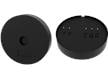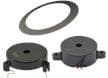

AMI-4440-TT-V

PUI Audio
665-AMI-4440-TT-V
AMI-4440-TT-V

Herst.:

Beschreibung:
Summer und Audioanzeigen – Bestückung 44MM MEDICAL INDICATOR 80DB IEC 60601-1-8 Ventilation

Lebenszyklus:
Neues Produkt:
Neu von diesem Hersteller.
ECAD Model:
Den kostenlosen Library Loader herunterladen, um diese Datei für Ihr ECAD Tool zu konvertieren. Weitere Infos zu ECAD-Modell.

Auf Lager: 111

Lagerbestand:
111 sofort lieferbar
Lieferzeit ab Hersteller:
2 Wochen Geschätzte Produktionszeit des Werks für Mengen, die größer als angezeigt sind.
Minimum: 1   Vielfache: 1
Stückpreis:
CHF -.--
Erw. Preis:
CHF -.--
Vorauss. Zolltarif:

Preis (CHF)

Menge Stückpreis
Erw. Preis
CHF 15.80 CHF 15.80
CHF 12.42 CHF 124.20
CHF 11.29 CHF 282.25
CHF 10.90 CHF 545.00
CHF 10.51 CHF 756.72

Produktattribut Attributwert Attribut auswählen
PUI Audio
Produktkategorie: Summer und Audioanzeigen – Bestückung
Marke: PUI Audio
Nennstrom: 150 mA
Durchmesser: 44 mm
Frequenz: 150 Hz to 4 kHz
Höhe: 10.25 mm
Montageart: PCB Mount
Verpackung: Tray
Produkt: Indicators
Produkt-Typ: Audio Indicators & Alerts
Klangdruckpegel: 80 dBA to 90 dBA
Verpackung ab Werk: 72
Unterkategorie: Audio Devices
Montage: Solder
Ton: Ventilation
Typ: Piezoelectric
Nennspannung: 3.3 V to 5 V
Produkte gefunden:
Um ähnliche Produkte anzuzeigen, wählen Sie mindestens ein Kontrollkästchen aus
Um ähnliche Produkte in dieser Kategorie anzuzeigen, wählen Sie mindestens ein Kontrollkästchen oben aus.
Ausgewählte Attribute: 0

USHTS:
8531809041
TARIC:
8531809540
ECCN:
EAR99

IEC 60601-1-8 Medical Audio Indicators

PUI Audio IEC 60601-1-8 Medical Audio Indicators regulate alarm signals in medical environments where multiple instruments simultaneously create audible alarms in the same room. These piezoelectric audio indicators feature a 3.3VDC to 5VDC operating voltage range, 20mA active current, 12mA standby current, and a frequency range of 150Hz to 4000Hz. The IEC 60601-1-8 audio indicators replaced the priority/note system with auditory icons and auditory pointers. The auditory icons utilize everyday sounds to enhance recognition and localization, and the auditory pointers identify the device and alarm priority. These audio indicators include three priority levels (low, medium, and high) to convey the appropriate urgency when the alarm is triggered. Typical applications include general, cardiovascular, oxygenation, and ventilation alarms.