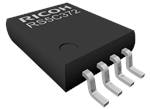

R2061L01-E2

Nisshinbo
848-R2061L01-E2
R2061L01-E2

Herst.:

Beschreibung:
Echtzeituhr 3-Wire Echtzeituhr IC

ECAD Model:
Den kostenlosen Library Loader herunterladen, um diese Datei für Ihr ECAD Tool zu konvertieren. Weitere Infos zu ECAD-Modell.

Verfügbarkeit

Lagerbestand:
Nicht auf Lager
Lieferzeit ab Hersteller:
12 Wochen Geschätzte Produktionszeit des Werks.
Minimum: 3000   Vielfache: 3000
Stückpreis:
CHF -.--
Erw. Preis:
CHF -.--
Vorauss. Zolltarif:
Dieses Produkt wird KOSTENLOS versandt

Preis (CHF)

Menge Stückpreis
Erw. Preis
Ganzes Reel (Sie bestellen ein Vielfaches von 3000)
CHF 0.598 CHF 1'794.00
CHF 0.587 CHF 3'522.00

Produktattribut Attributwert Attribut auswählen
Nisshinbo Micro Devices
Produktkategorie: Echtzeituhr
RoHS:  
Serial 3-Wire
BCD
BCD
QFN023023-16
Backup Switching
750 mV
5.5 V
- 40 C
+ 85 C
R2061L
SMD/SMT
Reel
Marke: Nisshinbo
Funktion: Alarm, Calendar, Clock, Timer Interrupt
Produkt-Typ: Real Time Clocks
Verpackung ab Werk: 3000
Unterkategorie: Clock & Timer ICs
Typ: CMOS Real-Time Clock and Calendar
Produkte gefunden:
Um ähnliche Produkte anzuzeigen, wählen Sie mindestens ein Kontrollkästchen aus
Um ähnliche Produkte in dieser Kategorie anzuzeigen, wählen Sie mindestens ein Kontrollkästchen oben aus.
Ausgewählte Attribute: 0

Für diese Funktionalität ist die Aktivierung von JavaScript erforderlich.

CNHTS:
8542399000
CAHTS:
8542390000
USHTS:
8542390090
JPHTS:
854239099
TARIC:
8542399000
MXHTS:
8542399901
ECCN:
EAR99

2/3-Wire Interface Real-Time Clock ICs

Nisshinbo 2- and 3-Wire Interface Real-Time Clock (RTC) ICs perform serial transmission of time and calendar data to a CPU. The R2061 (3-wire interface) RTC is connected to the CPU by CE, SCLK, and SIO signal lines. R2061 includes a battery backup switchover circuit and a voltage detector. This Nisshinbo IC features 0.75V minimum supply voltage and 0.4µA low power consumption. The R2061 device also includes a periodic interrupt circuit that is configured to generate interrupt signals with six selectable interrupts ranging from 0.5 seconds to one month. The two-alarm interrupt circuits generate interrupt signals at preset times.