



Texas Instruments MSP430FR5969 16-Bit Mischsignal-Mikrocontroller
Die MSP430FR5969 Mischsignal-Mikrocontroller von Texas Instruments sind MSP430-Mikrocontroller mit einem 16-Kanal-Analog-Komparator, einem 12-Bit-Analog-Digital-Wandler (ADC), erweiterten universellen seriellen Kommunikationsschnittstellen, fünf 16-Bit-Timern mit bis zu jeweils sieben Capture/Compare-Registern, einem 32-Bit-Hardware-Multiplizierer, einer internen 3-Kanal-DMA und einer Echtzeituhr (RTC) mit Kalender und Alarmfunktionen. Basierend auf einer (ULP) FRAM-Plattform mit extrem niedrigem Stromverbrauch, die einzigartig integrierten FRAM und eine holistische Systemarchitektur mit extrem niedrigem Stromverbrauch kombiniert, ermöglicht die MSP430FR5969 den Entwicklern, die Leistung bei niedrigen Energiebudgets zu erhöhen. Zur Ausstattung gehören ein eingebetteter Mikrocontroller mit 16-Bit-RISC-Architektur, ein breiter Versorgungsspannungsbereich von 1,8V bis 3,6V, optimierte Stromspar-Modi, bis zu 64KB nichtflüchtiger Speicher, Schreibgeschwindigkeiten mit extrem niedrigem Stromverbrauch von bis zu 125ns pro Wort (64KB in 4ms) und bis zu 40 Multifunktions-Eingabe-/Ausgabe-Ports. Der MSP430FR5969 16-Bit-Mischsignal-Mikrocontroller ist für längere Akkulaufzeit in energieintensiven Anwendungen optimiert und ideal für Messgeräte, Sensorknoten zur Energiegewinnung, tragbare Elektronik, Sensorverwaltung und Datenerfassung.
Features include an embedded microcontroller 16-bit RISC architecture, a wide supply voltage range of 1.8V to 3.6V, optimized ultra-low power modes, up to 64KB of nonvolatile memory, ultra-low power writes with speeds up to 125ns per word (64KB in 4ms), and up to 40 multifunction input/output ports. Optimized to achieve extended battery life in energy-challenged applications, the MSP430FR5969 16-bit Mixed-Signal Microcontroller is ideal for metering, energy harvested sensor nodes, wearable electronics, sensor management, and data logging.
Merkmale
- Embedded Microcontroller
- 16-Bit RISC Architecture up to 16‑MHz Clock
- Wide Supply Voltage Range(1.8V to 3.6V)
- Optimized Ultra-Low Power Modes
- Active Mode: Approximately 100µA/MHz
- Standby (LPM3 With VLO): 0.4µA (Typical)
- Real-Time Clock (LPM3.5): 0.25µA (Typical)
- Shutdown (LPM4.5): 0.02µA (Typical)
- Ultra-Low-Power Ferroelectric RAM (FRAM)
- Up to 64KB of Nonvolatile Memory
- Ultra-Low-Power Writes
- Fast Write at 125ns Per Word (64KB in 4ms)
- Unified Memory = Program + Data + Storage in One Single Space
- 1015 Write Cycle Endurance
- Radiation Resistant and Nonmagnetic
- Intelligent Digital Peripherals
- 32-Bit Hardware Multiplier (MPY)
- Three-Channel Internal DMA
- Real-Time Clock (RTC) With Calendar and Alarm Functions
- Five 16-Bit Timers With up to Seven Capture/Compare Registers Each
- 16-Bit Cyclic Redundancy Checker (CRC)
- High-Performance Analog
- 16-Channel Analog Comparator
- 12-Bit Analog-to-Digital Converter (ADC) With Internal Reference and Sample-and-Hold and up to 16 External Input Channels
- Multifunction Input/Output Ports
- All Pins Support Capacitive Touch Capability With No Need for External Components
- Accessible Bit-, Byte-, and Word-Wise (in Pairs)
- Edge-Selectable Wake From LPM on All Ports
- Programmable Pullup and Pulldown on All Ports
- Code Security and Encryption
- 128-Bit or 256-Bit AES Security Encryption and Decryption Coprocessor
- Random Number Seed for Random Number Generation Algorithms
- Enhanced Serial Communication
- eUSCI_A0 and eUSCI_A1 Support
- UART With Automatic Baud-Rate Detection
- IrDA Encode and Decode
- SPI at Rates up to 10Mbps
- eUSCI_B0 Supports
- I2C With Multiple Slave Addressing
- SPI at Rates up to 8Mbps
- Hardware UART and I2C Bootstrap Loader (BSL)
- eUSCI_A0 and eUSCI_A1 Support
- Flexible Clock System
- Fixed-Frequency DCO With 10 Selectable Factory-Trimmed Frequencies
- Low-Power Low-Frequency Internal Clock Source (VLO)
- 32-kHz Crystals (LFXT)
- High-Frequency Crystals (HFXT)
Applikationen
- Metering
- Energy Harvested Sensor Nodes
- Wearable Electronics
- Sensor Management
- Data Logging
Development Tools

Texas Instruments BOOST-IR BoosterPack™ Plug-in-Modul
Kann in das Launchpad™ Entwicklungs-Kit gesteckt werden für eine einfache Integration von IR-Transceiver-Funktionalität.

Texas Instruments BOOSTXL-SHARP128 BoosterPack™-Plug-in-Modul
Basierend auf dem LS013B7DH03 TFT-Display-Panel von Sharp Electronics und verfügen über einen microSD-Kartenerweiterungs-Steckplatz.

Texas Instruments C-GANG Kostengünstiger Gang-Programmierer
Der Gang-Programmierer kann bis zu sechs Ziele gleichzeitig programmieren und ist mit den MSPM0/MSP430 Bauteilen kompatibel.
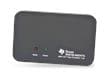
Texas Instruments MSP-FET Flash-Emulationstool
Dieses Tool ermöglicht Benutzern einen schnellen Einstieg in die Entwicklung von Applikationen auf Grundlage der stromsparenden MSP-Mikrocontrollern (MCUs).

Texas Instruments MSP-TS430RGZ48C Ziel-Development-Board
Eigenständige 48-Pin-ZIF-Sockel-Zielplatine zum Programmieren und zur Fehlerbeseitigung des MSP430 MCU-in-Systems.
Associated Product

Texas Instruments MSP430™ Microcontrollers
TI MSP430 series includes 16-bit RISC CPUs, 16-bit registers, and constant generators.
Functional Block Diagram

Learn More About
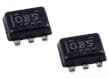
Texas Instruments Kühlketten-Lösungen
Bietet eine Vielzahl von Lösungen für das Kühlkettenmanagement, um den zunehmenden Sicherheitsbestimmungen gerecht zu werden.
TI Reference Designs Library
